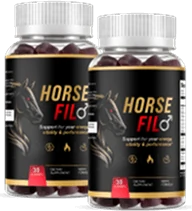
L-Citrulline turns up in almost every men's vitality formula sold today, usually with a one-line explanation about blood flow and nothing more. It is worth understanding properly, because the mechanism is genuinely interesting and it explains why the ingredient is chosen over an obvious-looking alternative.
Where it comes from
L-Citrulline is a non-essential amino acid, meaning your body makes it rather than depending on diet. It takes its name from Citrullus lanatus, the watermelon, which remains its best-known food source. It also appears in cucumber, pumpkin and other cucurbits, though at levels far below a supplemental dose.
Inside the body it is a working part of the urea cycle, the process that clears ammonia produced by protein metabolism. That is its housekeeping job. Its role in supplements is a different one.
Citrulline, or citrulline malate?
You will see both on labels and they are not identical. Plain L-Citrulline is the amino acid alone. Citrulline malate pairs it with malic acid, a compound involved in the Krebs cycle, and much of the older exercise research was conducted using the malate form.
The practical catch is that citrulline malate is a ratio — commonly 2:1 citrulline to malate — so a gram of citrulline malate is not a gram of citrulline. When comparing two products, check which form is listed before comparing the numbers, or you will be comparing different things.
Neither form is obviously superior for general daily use. The malate version has more of the exercise literature behind it; the plain version is simpler to compare across labels. Where a product does not disclose amounts at all, as HorseFill does not, the distinction becomes academic — you cannot compare figures that are not published.
The nitric oxide pathway
Nitric oxide is a signalling molecule produced by the cells lining your blood vessels. When released, it tells the smooth muscle in the vessel wall to relax, which widens the vessel. This is a normal, continuous process in a healthy body and it underpins how blood is distributed to working tissue.
The direct precursor to nitric oxide is another amino acid, L-arginine. So the obvious approach would be to supplement arginine. This is where it gets counterintuitive.
Why citrulline instead of arginine
Arginine taken by mouth is largely intercepted before it does anything useful. Enzymes in the small intestine and the liver break down a substantial fraction of an oral arginine dose during first-pass metabolism, so a lot of what you swallow never reaches general circulation.
Citrulline bypasses that gauntlet. It passes through the gut and liver largely untouched, reaches the kidneys, and is converted there into arginine. The practical result is that supplemental citrulline raises blood arginine levels more reliably than supplemental arginine does — a genuinely surprising finding, and the reason serious formulas use citrulline.
This is why the ingredient is described as supporting the body's natural nitric oxide production and healthy blood flow already within normal range. It is feeding a pathway the body already runs, not overriding it.
What it is reasonable to expect
Citrulline is among the better-studied ingredients in sports nutrition, with a research base covering blood flow markers and exercise performance. The honest summary is that the evidence is real but modest, effects are incremental rather than dramatic, and dose matters considerably — most of the literature works at gram-level intakes.
That last point is why ingredient amounts matter so much on a label. A formula listing citrulline tells you it is present. It does not tell you whether it is present at a level anyone has studied. Where a product does not disclose amounts, as HorseFill does not, that is a real gap in what you can assess before buying.
Who should be careful
Because citrulline works on the nitric oxide pathway, and that pathway is directly involved in blood vessel dilation, it deserves genuine caution alongside certain medicines.
Speak to your doctor or pharmacist before taking any citrulline-containing supplement if you use blood pressure medication, nitrates or blood thinners, if you have a cardiovascular condition, or if you have surgery scheduled. This is not a boilerplate warning attached out of habit — it is the specific mechanism of the ingredient meeting the specific mechanism of those drugs.
The short version
An amino acid your body already makes, which feeds the pathway that produces nitric oxide, and which works better as a supplement than the more obvious candidate because it survives first-pass metabolism. Modest, incremental, dose-dependent, and worth a conversation with your doctor if you are on cardiovascular medication.
Before starting any supplement
Speak to your doctor or pharmacist first if you take blood pressure medication, nitrates, blood thinners or diabetes medication, if you have a diagnosed medical condition, or if you have surgery scheduled. Not for anyone under 18, and not for women who are pregnant or nursing. Nothing here is medical advice. These statements have not been evaluated by the Food and Drug Administration, and this product is not intended to diagnose, treat, cure or prevent any disease.