Maca and panax ginseng appear side by side on so many labels that they have become interchangeable in most people's minds. They are not remotely the same thing. One is a food crop, the other is a concentrated medicinal root with two millennia of documented use, and knowing which is which changes how you read a label.
What each one is
Maca is Lepidium meyenii, a cruciferous root vegetable — a relative of radish and turnip — grown above 4,000 metres in the Peruvian Andes. It has been cultivated and eaten as a staple food for centuries. It looks and behaves like a vegetable, because it is one.
Panax ginseng is the Asian or "true" ginseng, a slow-growing perennial root that typically needs four to six years before harvest. It has been used in traditional Chinese medicine for well over two thousand years and is among the most heavily studied botanicals in the world. Its characteristic compounds are ginsenosides.
Traditional use
Maca's traditional role is nutritional and tonic: eaten as food, dried and stored, used to support endurance and general vitality in a punishing high-altitude environment. The framing is closer to "nourishing staple" than "remedy".
Ginseng's traditional role is different in kind. It is a considered, targeted botanical used for stamina, vitality and resilience during exertion, and it has always been treated as something to be dosed rather than eaten freely.
Colour, type and why labels get confusing
Both plants come in variants that labels rarely explain. Maca is sold as yellow, red or black, sorted by root colour, and Peruvian growers have long associated each with slightly different uses — black maca in particular is the one traditionally linked to stamina in men. Most supplements use yellow, which is the most abundant, and many do not specify at all.
Ginseng is worse. "Ginseng" on a label may mean panax ginseng, American ginseng (a different Panax species), or Siberian ginseng, which is not a ginseng at all but an unrelated plant, Eleutherococcus senticosus. Only the first is the panax ginseng described here. If a label says simply "ginseng" without a species, that ambiguity is itself worth noting.
How the evidence differs
This is the practical distinction. Ginseng has a far larger research base — hundreds of human trials across fatigue, physical performance and cognition. That volume is a real advantage, but it comes with an honest caveat: the results are genuinely mixed. Some trials are positive, others neutral, study quality varies considerably, and ginsenoside content differs enormously between preparations.
Maca has a smaller literature. Much of it is preliminary, sample sizes tend to be modest, and a good deal of the work comes from a narrow set of research groups. Its stronger claim is different: a long record of ordinary dietary consumption at food-level quantities, which is meaningful evidence of a kind, just not the clinical kind.
So: ginseng has more studies with mixed conclusions; maca has fewer studies but a long history as food. Both are reasonable inclusions. Neither justifies a dramatic promise.
Why formulas include both
Partly because they cover different ground — a concentrated botanical with a research base alongside a nutritional root with a dietary history. Partly, honestly, because both are familiar to buyers and both are expected on a men's label.
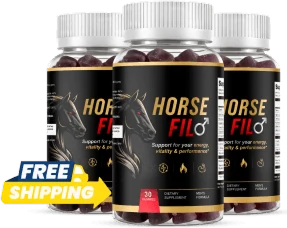
The more useful question is not whether a formula contains both, but how much of each it contains. Ginseng in particular is only as good as its ginsenoside content and the amount used, and neither is visible on a label that does not disclose quantities. HorseFill includes both and does not publish amounts, which is worth knowing before you buy rather than after.
Cautions worth knowing
Panax ginseng is the one to be careful with. It has documented interactions with blood thinners such as warfarin, and it can affect blood sugar, which matters if you take diabetes medication. It may also interact with certain antidepressants. Speak to your doctor or pharmacist before taking a ginseng-containing supplement if any of that applies to you.
Maca is generally regarded as well tolerated given its history as food, though the same rule holds: if you take regular medication or manage a medical condition, clear it with your doctor first rather than assuming a vegetable is automatically neutral.
The short version
Ginseng is a concentrated medicinal root with a large but mixed evidence base and real interaction risks. Maca is a nutritional food crop with a smaller research base and a long dietary history. They complement each other rather than duplicate, and in both cases the amount used matters more than the mere presence of the name on a label.
Before starting any supplement
Speak to your doctor or pharmacist first if you take blood pressure medication, nitrates, blood thinners or diabetes medication, if you have a diagnosed medical condition, or if you have surgery scheduled. Not for anyone under 18, and not for women who are pregnant or nursing. Nothing here is medical advice. These statements have not been evaluated by the Food and Drug Administration, and this product is not intended to diagnose, treat, cure or prevent any disease.